


A swimming pool is one of the most rewarding investments you can make in your property. It adds beauty, increases real estate value, provides a space for fitness and recreation, and transforms an ordinary backyard into a personal retreat. But before you break ground or sign a contract, one of the most critical decisions you will face is choosing which type of pool is right for you.
Understanding the different types of swimming pools available — and what each one offers in terms of cost, maintenance, space requirements, aesthetic appeal, and functionality — is the essential first step toward making a decision you will be happy with for decades. From humble inflatable kiddie pools to breathtaking infinity designs overlooking panoramic landscapes, the range of options available today is broader than ever before.
In this comprehensive guide, we walk you through all the major different types of swimming pools, explain the pros and cons of each, discuss how to match the right pool type to your lifestyle and budget, and help you understand the key factors that should drive your final choice. Whether you are building your first family pool or upgrading to a luxury design, this guide covers everything you need to know.
Why Choosing the Right Type of Swimming Pool Matters
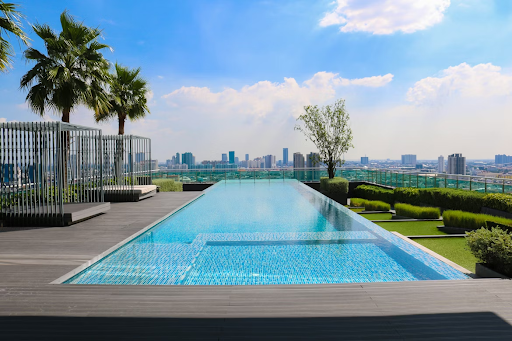
Not all swimming pools are created equal. The different types of swimming pools on the market vary enormously in construction materials, installation complexity, running costs, lifespan, water treatment requirements, and suitability for various uses. Choosing the wrong type can mean overspending on features you do not use, dealing with maintenance challenges you were not prepared for, or ending up with a pool that simply does not fit your available space.
The right pool type, on the other hand, delivers years of enjoyment, adds lasting value to your property, and integrates seamlessly with both your lifestyle and your outdoor space. Let us explore each of the different types of swimming pools in detail.
The 12 Different Types of Swimming Pools: A Complete Overview
1. Kiddie Pools — Safe, Simple, and Budget-Friendly
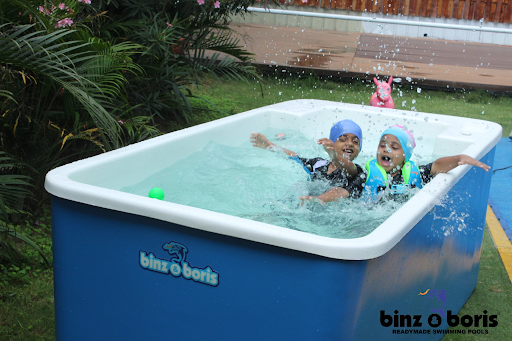
Kiddie pools are the most accessible entry point into the world of swimming pools. These small, shallow, portable pools are typically made from soft plastic, vinyl, or inflatable PVC material and are designed exclusively for young children who want to splash around and cool off on hot days. Because of their low depth, usually no more than 30 to 45 centimetres — they are inherently safe for toddlers under close adult supervision.
Among all the different types of swimming pools, the kiddie pool is by far the least expensive and the easiest to set up. Most can be inflated and filled within minutes, and they require no professional installation whatsoever. When summer ends, they can be deflated, dried, and stored in a cupboard until the following season.
The main limitations are obvious: kiddie pools serve only one demographic — very young children — and they have no filtration systems, meaning the water must be changed frequently to prevent bacterial growth. They are not suitable for older children or adults, and they offer no long-term property value.
Pros:
✓ Extremely low cost — often available for under ₹500
✓ No installation required — set up in minutes
✓ Easy to store and transport between seasons
Cons:
✗ Suitable only for toddlers and young children
✗ No filtration system — requires frequent water changes
✗ No long-term value or permanence
2. Above-Ground Pools — Affordable Family Swimming Without the Commitment
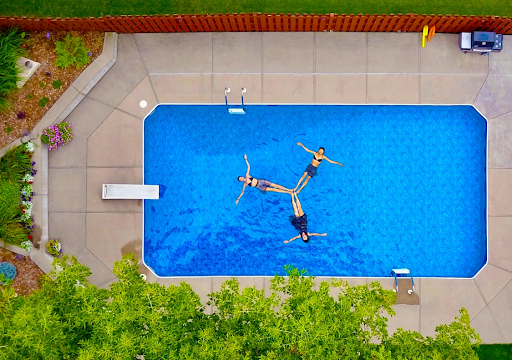
Above-ground pools occupy a compelling middle ground in the spectrum of different types of swimming pools. They offer a genuine swimming experience — real water depth, a usable swimming area, and room for the whole family — without the substantial cost and permanence of an in-ground installation. These pools typically consist of a metal, resin, or wood frame structure with a vinyl liner that holds the water.
One of the most significant advantages of above-ground pools is their flexibility. Because they are not permanently installed, they can theoretically be dismantled and moved if you relocate. They also require no excavation, which dramatically reduces installation time and cost. A quality above-ground pool can often be installed and ready for use within a single day.
Above-ground pools come in a wide variety of shapes — round, oval, and rectangular — and sizes, from compact 3-metre rounds to large 8-metre ovals. Many modern above-ground pool designs are surprisingly attractive, with wood-effect panelling and deck integration options that make them look far more premium than their price suggests.
The trade-off is longevity and aesthetics. Above-ground pools generally do not last as long as in-ground models, the vinyl liner will need periodic replacement, and they do not add the same level of property value as a permanent in-ground installation. They also require a large, completely level surface area.
Pros:
✓ Significantly lower cost than in-ground alternatives
✓ No excavation required — much faster installation
✓ Portable — can be dismantled and relocated
Cons:
✗ Shorter lifespan than in-ground pools
✗ Requires a large, completely level surface
✗ Adds less property value than permanent installations
3. In-Ground Family Pools — The Classic Choice for Permanent Luxury
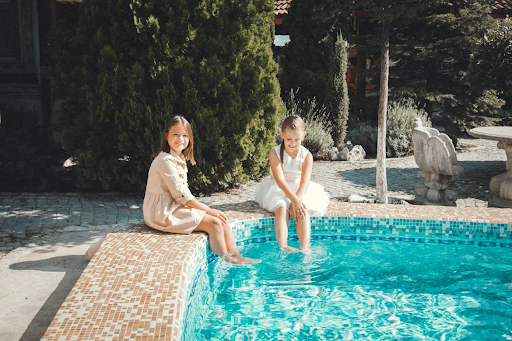
When most people picture a swimming pool, they are imagining an in-ground family pool. These are the quintessential, permanent pools that are excavated into the ground and built using concrete, fibreglass, or vinyl liner systems. Among all the different types of swimming pools, the in-ground family pool is the most popular choice for homeowners who want a long-term, high-quality swimming facility that enhances both their lifestyle and their property value.
In-ground pools are fully customisable. You choose the shape — rectangular, kidney, L-shaped, freeform, or entirely bespoke — the depth profile, the surface finish, the surrounding decking, and the range of features such as lighting, water features, heating, and automation systems. This level of personalisation means your pool can be tailored precisely to how your family intends to use it.
Concrete pools (also known as gunite or shotcrete pools) offer the greatest design flexibility and the longest lifespan, often 50 years or more with proper maintenance. Fibreglass pools are pre-moulded and arrive as a single shell, making them faster to install and gentler on swimmers’ skin. Vinyl liner in-ground pools offer a cost-effective middle ground with a smooth interior surface, though the liner will need replacement every 8 to 12 years.
The primary drawbacks of in-ground family pools are their higher initial cost and the ongoing maintenance commitment. Regular cleaning, chemical balancing, filtration system servicing, and periodic resurfacing are all necessary to keep the pool in good condition over the long term.
Pros:
✓ Fully customisable in shape, depth, size, and features
✓ Significantly increases property value
✓ Long lifespan — concrete pools can last 50+ years
Cons:
✗ High initial installation cost
✗ Requires regular and ongoing maintenance
✗ Longer construction timeline compared to above-ground options
4. Lap Pools — Purpose-Built for Fitness and Exercise
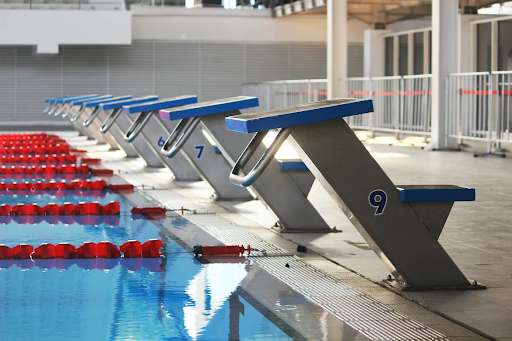
For swimming enthusiasts who prioritise fitness over recreation, the lap pool is one of the most practical different types of swimming pools available. As the name suggests, lap pools are long, narrow pools specifically designed for swimming laps — continuous, uninterrupted lengths that form the basis of swimming as cardiovascular exercise. A standard residential lap pool is typically between 15 and 25 metres long and no more than 3 metres wide.
The elongated, narrow form of the lap pool makes it ideal for properties where space is limited in width but available in length — a narrow suburban garden, for example, or a courtyard. They are also extremely water-efficient relative to their length, requiring less water than a wider family pool of comparable size.
Lap pools are frequently chosen by competitive swimmers who train at home, fitness-focused homeowners who want a daily exercise option, and hotels, gyms, and sports clubs that want to provide swimming facilities without the footprint of a full-size pool. Some lap pool installations incorporate swim current systems — essentially powerful jets that create an artificial current to swim against — allowing a continuous swimming experience in pools as short as 4 to 5 metres.
Pros:
✓ Excellent for fitness and cardiovascular training
✓ Space-efficient — ideal for narrow plots
✓ Water-efficient relative to their length
Cons:
✗ Not well-suited to casual recreation or family play
✗ The narrow design may not suit all garden landscapes aesthetically
✗ Limited versatility beyond fitness swimming
5. Indoor Pools — Year-Round Swimming Regardless of Weather
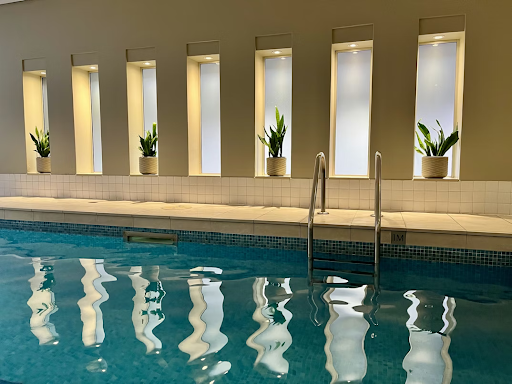
An indoor pool solves one of the most frustrating limitations of traditional outdoor swimming: seasonal weather. By enclosing the pool within a building, conservatory, or purpose-built pool house structure, indoor pools provide year-round access to swimming regardless of the season, temperature, or rainfall. This makes them enormously appealing in regions like much of India, where monsoon seasons or cool winters can make outdoor swimming impractical for months at a time.
Indoor pools are popular in luxury residences, five-star hotels, wellness resorts, rehabilitation centres, and fitness clubs. They offer exceptional privacy, are unaffected by wind and outdoor debris, and can be maintained at a consistent water and air temperature throughout the year. The controlled environment also means significantly less water evaporation compared to outdoor pools.
The challenges of indoor pools are primarily related to the building requirements and ventilation. The structure housing the pool must be specifically designed to handle high levels of humidity and chlorine vapour, which can be corrosive to building materials and harmful to air quality if not properly managed. A high-quality HVAC system with dedicated pool ventilation is not optional — it is essential for indoor pool installations. These additional construction and mechanical requirements make indoor pools among the most expensive of all the different types of swimming pools.
Pros:
✓ Year-round accessibility, unaffected by weather
✓ Enhanced privacy — no exposure to neighbours or passersby
✓ Less water evaporation and debris compared to outdoor pools
Cons:
✗ High installation cost due to building and ventilation requirements
✗ Requires specialist HVAC systems to manage humidity and air quality
✗ Higher energy costs for heating and air management
6. Olympic-Size Pools — The Gold Standard for Competitive Swimming
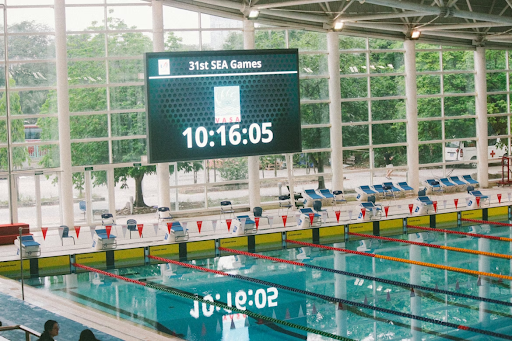
Olympic-size swimming pools represent the pinnacle of aquatic facility design. Standardised by international governing bodies including World Aquatics (formerly FINA), an Olympic pool measures precisely 50 metres in length and 25 metres in width, with a minimum depth of 2 metres and 10 competition lanes each 2.5 metres wide. Every detail, from the starting block heights to the lane rope specifications, is defined by competitive standards.
Among all the different types of swimming pools, the Olympic pool is the most demanding in terms of space, construction cost, and maintenance. These are not residential pools — they are primarily found in national and state sports facilities, universities, elite training academies, and large commercial aquatic centres. Building and maintaining an Olympic pool requires specialist engineering, sophisticated water treatment systems, electronic timing infrastructure, and a significant ongoing operational budget.
For clubs, schools, and municipalities that want competitive-standard facilities without the full Olympic footprint, a 25-metre semi-Olympic or short-course pool is a practical and far more cost-effective alternative, still meeting the standards required for most national and regional competitions.
Pros:
✓ Meets international standards for competitive swimming events and training
✓ Accommodates a large number of swimmers simultaneously
Cons:
✗ Extremely high construction and operational cost
✗ Requires enormous space — impractical for all but the largest facilities
✗ Complex, resource-intensive maintenance requirements
7. Architectural Pools — Where Art Meets Water
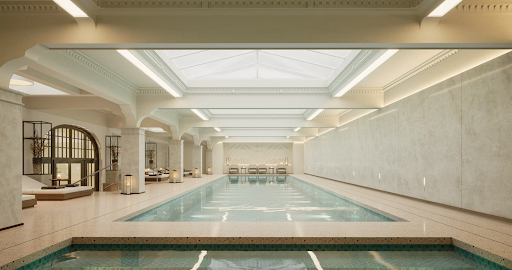
Architectural pools represent the intersection of swimming pool engineering and fine design. Unlike standard pools that prioritise function and follow conventional shapes, architectural pools are conceived as design statements — integral elements of a broader architectural or landscape vision. They are custom-designed to complement and enhance the specific aesthetics of a property, working in harmony with the building’s lines, materials, and spatial arrangement.
You will find architectural pools at luxury hotels, high-end private residences, heritage properties, and architectural showpieces. They often feature unconventional shapes, minimalist clean-lined designs, premium materials such as natural stone or hand-laid mosaic tiles, integrated water walls and features, and sophisticated lighting schemes that transform the pool into a visual focal point after dark.
Among the different types of swimming pools, architectural pools are among the most expensive to design and build, requiring close collaboration between architects, landscape designers, structural engineers, and specialist pool contractors. The emphasis on aesthetics can sometimes mean that functional considerations — such as ease of maintenance or lap swimming suitability — take a secondary role. However, for properties where visual impact is the primary goal, an architectural pool is incomparable.
Pros:
✓ Dramatically enhances property aesthetics and perceived value
✓ Fully bespoke design — no two architectural pools are identical
Cons:
✗ Very high design and construction cost
✗ Design priorities may compromise functional usability
8. Infinity Pools — The Epitome of Luxury Pool Design
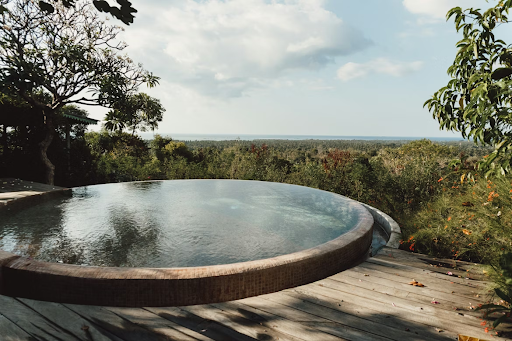
Few of the different types of swimming pools generate as much visual impact or aspiration as the infinity pool. Also known as a vanishing edge, negative edge, or zero-edge pool, the infinity pool is engineered with one or more edges where the water level meets the rim of the pool exactly, creating the powerful visual illusion that the water extends endlessly into the landscape, sky, or horizon beyond.
The engineering behind an infinity pool is sophisticated. The water that flows over the vanishing edge is collected in a catch basin (or balance tank) below, filtered, and recirculated back into the main pool — a continuous loop that maintains the seamless visual effect while conserving water. The position of the vanishing edge is carefully calculated during design to align perfectly with the view the architect intends to frame.
Infinity pools are most powerful when installed in elevated positions that overlook a dramatic landscape — a hillside home with a valley view, a coastal property overlooking the ocean, a rooftop terrace in a city skyline. In these settings, the illusion of the water merging with the scenery beyond is breathtaking and genuinely unlike anything any other pool type can offer.
The trade-off is cost and complexity. Infinity pools are among the most expensive of all the different types of swimming pools to design, build, and maintain. The catch basin and recirculation system add significant structural and mechanical complexity, and the pool’s position on sloping or elevated terrain adds to construction challenges and costs.
Pros:
✓ Unrivalled visual drama and luxury appeal
✓ Creates a seamless connection between the pool and its surrounding landscape
Cons:
✗ Among the highest installation and maintenance costs of all pool types
✗ Requires elevated or sloped terrain to achieve the vanishing edge effect
✗ The catch basin and recirculation system add mechanical complexity
9. Natural Pools — Chemical-Free Swimming in Harmony with Nature
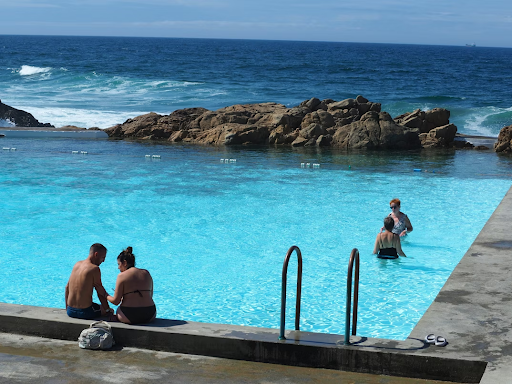
For those who want to swim without chlorine, chemicals, or synthetic water treatment — and who love the idea of a pool that looks like a natural pond — natural pools are a compelling and increasingly popular choice. Among all the different types of swimming pools, natural pools are the most environmentally integrated, using aquatic plants, beneficial bacteria, and a purpose-designed regeneration zone to filter and purify the water biologically rather than chemically.
A natural pool is typically divided into two areas: the swimming zone, which is kept clear and clean for bathing, and the regeneration or plant zone, which is planted with a carefully selected mix of aquatic and marginal plants that absorb nutrients, filter impurities, and maintain the biological balance of the water. Circulation pumps keep the water moving gently between the two zones, ensuring that the swimming area remains clean and oxygenated.
The result, when properly designed and maintained, is crystal-clear water that is completely free of chlorine and harsh chemicals — gentler on skin, eyes, and hair, and safe for children and people with chemical sensitivities. Natural pools also create genuine wildlife habitats, attracting dragonflies, frogs, birds, and beneficial insects, and they blend beautifully into naturalistic garden settings.
The challenges include larger footprint requirements (the plant zone typically occupies at least as much area as the swimming zone), higher design and initial construction costs compared to conventional pools, and the need for careful ecological management to maintain the biological balance. Water clarity can also be more variable than a chemically treated pool, particularly in the early stages while the ecosystem establishes itself.
Pros:
✓ Completely chemical-free — gentle on skin, eyes, and hair
✓ Environmentally integrated — supports biodiversity and wildlife
✓ Stunning natural aesthetic — resembles a beautiful pond
Cons:
✗ Requires more land area to accommodate the regeneration zone
✗ Water clarity may vary while the ecosystem establishes
✗ Requires careful ecological management rather than standard chemical treatment
10. Spools — The Smart Solution for Small Spaces and Spa Lovers
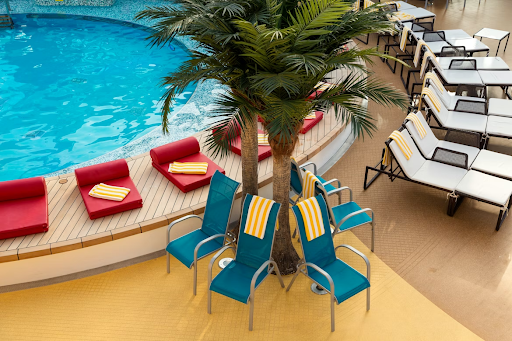
A spool is a hybrid between a swimming pool and a spa — essentially a compact pool that combines the depth and volume of a small pool with the therapeutic features of a hot tub or spa. The name is a portmanteau of “spa” and “pool,” and the design reflects that dual identity. Spools are typically between 3.5 and 6 metres in length, making them perfectly sized for small urban gardens, rooftop terraces, and compact outdoor spaces where a full-size pool simply would not fit.
Despite their modest dimensions, spools punch well above their weight in terms of functionality. They are typically deep enough for water aerobics, casual swimming, and play, and they incorporate jets, heating systems, and hydrotherapy features that allow them to function as a hot tub or therapeutic spa when desired. The heating capability means spools can be used year-round, even in cooler weather, making them an especially versatile investment.
Among the different types of swimming pools suited to urban and space-constrained properties, the spool is arguably the most practical and cost-effective choice for homeowners who want both the experience of a swimming pool and the relaxation of a spa without the footprint of either.
Pros:
✓ Space-efficient — ideal for small gardens and urban properties
✓ Combines swimming and spa/hydrotherapy in one installation
✓ Heatable for year-round use
Cons:
✗ Too small for lap swimming or active play with multiple family members
✗ Limited capacity — best suited for one to three users at a time
11. Saltwater Pools — A Gentler, Lower-Chemical Swimming Experience
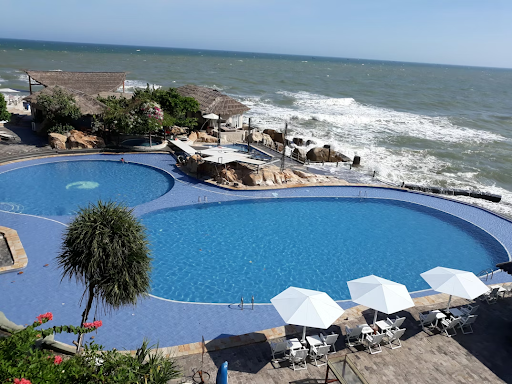
Saltwater pools have grown enormously in popularity over the past decade, and it is easy to understand why. Rather than manually adding chlorine to the pool water, a saltwater pool uses a salt-chlorine generator (also called an electrolytic chlorinator) to produce chlorine automatically and continuously from dissolved salt in the water. The result is a pool that maintains consistent chlorine levels with far less manual chemical management — and a swimming experience that feels noticeably softer and more comfortable than a traditionally chlorinated pool.
The water in a saltwater pool is far less saline than the ocean — typically around 3,000 to 4,000 parts per million (ppm) of salt, compared to approximately 35,000 ppm in seawater. This is approximately the same salt concentration as human tears, which is why saltwater pools feel so gentle on the eyes, skin, and hair. Swimmers who experience irritation, dry skin, or eye redness in conventionally chlorinated pools often find saltwater pools dramatically more comfortable.
It is important to note that saltwater pools are not chlorine-free — they still use chlorine as the primary sanitiser, just generated on-site rather than added manually. This means water chemistry still needs to be monitored and periodically adjusted. The salt-chlorine generator also requires maintenance and will need replacement every 3 to 7 years depending on the model and usage.
Pros:
✓ Much gentler on skin, eyes, and hair than traditionally chlorinated pools
✓ Automated chlorine generation reduces manual chemical management
✓ Generally lower ongoing chemical costs after initial setup
Cons:
✗ Higher initial cost for the salt-chlorine generator unit
✗ Generator requires periodic maintenance and eventual replacement
✗ Salt can be corrosive to certain pool materials, fixtures, and surrounding landscape elements
12. Plunge Pools — Compact, Cool, and Perfect for Limited Spaces
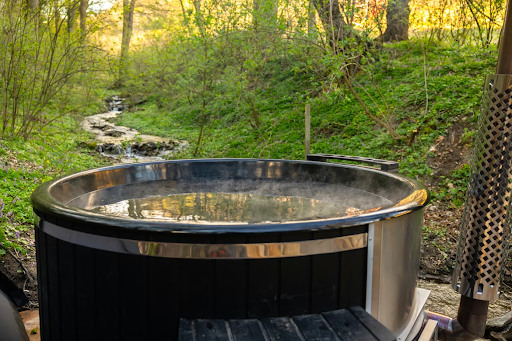
Plunge pools are compact, typically circular or square pools designed primarily for immersion and cooling rather than active swimming. They are deeper than their surface area might suggest — often 1.5 to 2 metres deep — which gives them a surprisingly spa-like quality. Originating from the concept of the cold plunge bath used in ancient Roman and traditional Nordic wellness practices, modern plunge pools have evolved into stylish, versatile features for contemporary homes.
Among the different types of swimming pools available for small and urban properties, the plunge pool offers an excellent combination of visual impact, cooling functionality, and manageable maintenance requirements. Because they hold a much smaller volume of water than a full-size pool, they are less expensive to fill, heat, and chemically treat. Many modern plunge pools can also be heated to spa temperatures, effectively combining the cooling benefits of a cold plunge with the relaxation of a hot tub.
Plunge pools work particularly well in small courtyard gardens, on terraces, beside outdoor entertainment areas, or as a complement to an existing garden landscape where a full pool would be impractical. They are not designed for lap swimming or energetic play, but as a cooling and relaxation feature they are hard to beat.
Pros:
✓ Ideal for small spaces — minimal footprint
✓ Lower water volume means reduced chemical and heating costs
✓ Can be heated to serve dual hot/cold plunge function
Cons:
✗ Not suitable for lap swimming or energetic family recreation
✗ Limited capacity for multiple users at one time
Bonus: Swim Spas — The Most Space-Efficient Fitness Pool
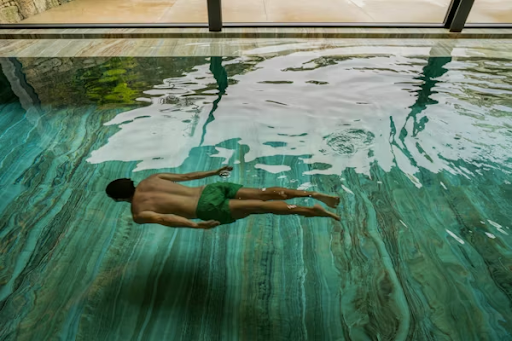
No comprehensive guide to the different types of swimming pools would be complete without mentioning the swim spa — a category that has seen explosive growth in recent years. A swim spa is a compact, self-contained unit (typically 4 to 6 metres long) that combines a powerful swim current system with hydrotherapy spa jets, allowing users to swim continuously against an artificial current in a very small footprint.
Swim spas are factory-built and delivered as a finished unit — much like an above-ground pool or hot tub — and can be installed above ground, partially sunk, or fully recessed into decking or ground. They are heated, fully enclosed, and can be used year-round. For fitness swimmers who lack the garden space for a lap pool, the swim spa is a genuinely effective alternative.
How to Choose Between the Different Types of Swimming Pools
With so many different types of swimming pools to consider, the decision can feel overwhelming. Breaking it down into a set of clear factors makes the choice much more manageable.
Budget
Your budget will inevitably narrow the field. Kiddie and above-ground pools sit at the affordable end of the spectrum. In-ground family pools represent a substantial but widely undertaken investment. Infinity pools, indoor pools, and Olympic pools are at the premium end and often require specialist contractors and significant ongoing operational budgets.
Available Space
The size and shape of your available outdoor (or indoor) space will determine which pool types are physically feasible. Lap pools and spools work well in narrow or small gardens. Infinity pools require elevation and a view. Natural pools require more land than most conventional options. Olympic pools require enormous dedicated facilities.
Intended Use
Think carefully about how you and your family will actually use the pool. For fitness training, a lap pool or swim spa is the most logical choice. For family recreation, an in-ground family pool delivers the best experience. For relaxation and wellness, a spool, plunge pool, or saltwater pool may be ideal. For competitive swimming, an Olympic or semi-Olympic pool is required.
Climate and Season
In regions with long, hot summers, an outdoor pool of virtually any type works well. In cooler climates or areas with heavy monsoon seasons, an indoor pool or a heatable spool provides year-round value that a standard outdoor pool cannot match.
Maintenance Commitment
Different types of swimming pools carry very different maintenance burdens. Natural pools require ecological management. Saltwater pools reduce chemical work but still need monitoring. Infinity pools require ongoing attention to the catch basin and recirculation system. In-ground concrete pools need periodic resurfacing. Understanding what you are committing to before you build is essential.
Quick Reference: Comparing the Different Types of Swimming Pools
The table below provides a at-a-glance comparison of the key characteristics of each pool type to help guide your decision.
|
Pool Type |
Best For |
Space Needed |
Relative Cost |
Key Feature |
|
Kiddie Pool |
Toddlers |
Very Small |
Very Low |
Portable & inflatable |
|
Above-Ground |
Families on budget |
Medium |
Low |
No excavation needed |
|
In-Ground Family |
All-round family use |
Large |
Medium–High |
Fully customisable |
|
Lap Pool |
Fitness swimmers |
Narrow/Long |
Medium |
Space-efficient length |
|
Indoor Pool |
Year-round swimming |
Large |
High |
Weather-independent |
|
Olympic Pool |
Competitive sport |
Very Large |
Very High |
Meets FINA standards |
|
Architectural |
Luxury aesthetics |
Varies |
Very High |
Bespoke design |
|
Infinity Pool |
Scenic properties |
Elevated |
High |
Vanishing edge effect |
|
Natural Pool |
Eco-conscious owners |
Large |
Medium–High |
Zero chemicals |
|
Spool |
Small urban spaces |
Small |
Medium |
Pool + spa hybrid |
|
Saltwater Pool |
Sensitive skin |
Varies |
Medium |
Auto-chlorine system |
|
Plunge Pool |
Cooling & relaxing |
Very Small |
Low–Medium |
Deep, compact design |
Conclusion: The Right Pool Is Out There for Every Budget, Space, and Lifestyle
The world of swimming pools is richer, more diverse, and more accessible than ever before. Whether you are drawn to the simplicity of a compact plunge pool, the eco-friendly serenity of a natural pool, the fitness focus of a lap pool, the family-friendly versatility of an in-ground pool, or the breathtaking drama of an infinity pool, there is a type of swimming pool that is right for your specific needs, space, and ambitions.
Understanding the different types of swimming pools — their costs, their maintenance requirements, their ideal use cases, and their aesthetic qualities — is the essential foundation for making a decision you will be proud of for years to come. A swimming pool is not just a luxury; it is a long-term investment in your quality of life, your family’s wellbeing, and the value of your property.
At Apram Pools, our experienced team is here to help you navigate the different types of swimming pools and find the perfect match for your home, budget, and lifestyle. From initial consultation and design through to construction, water treatment system installation, and ongoing maintenance, we bring the expertise and craftsmanship to make your pool vision a reality. Contact us today to start the conversation.


